
Why should anyone obey the government? Social contract theory offers one of the most influential answers in the history of political philosophy: legitimate political authority arises from an (actual or hypothetical) agreement among individuals. This guide covers the major social contract thinkers — Hobbes, Locke, Rousseau, and Rawls — with detailed worked examples for assignments. These questions connect to normative ethical theories (what obligations do we owe one another?) and to free will and determinism (can consent be meaningfully “free”?).
Table of Contents
Toggle1. The Basic Structure of Social Contract Theory
Social contract theories typically proceed in two stages:
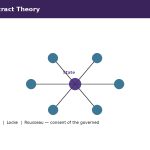
- The state of nature: a hypothetical (or, for some thinkers, historical) condition of humanity before organized political society, used as a baseline for evaluating what legitimate government would need to provide.
- The social contract: the (real or hypothetical) agreement by which individuals consent to leave the state of nature and submit to political authority, in exchange for benefits (security, rights protection, cooperation) that authority provides.
The legitimacy of government, on this view, rests on some form of consent — actual, tacit, or hypothetical — rather than divine right, tradition, or brute force.
2. Thomas Hobbes: Absolute Sovereignty
Hobbes, writing during the English Civil War in his 1651 work Leviathan, offered perhaps the bleakest picture of the state of nature.
2.1 The State of Nature as War
Hobbes argued that, absent government, humans are roughly equal in physical power (even the strongest can be killed by a coalition of the weak, or while asleep), have competing desires for scarce resources, and lack any common authority to keep them in check. The result, he famously argued, is a “war of all against all” in which life is “solitary, poor, nasty, brutish, and short.”
Worked Example: Hobbes points out that even in civil society, people lock their doors, secure their belongings, and take precautions against their fellow citizens — indirect evidence, he argues, that we implicitly recognize the dangerous potential of human nature absent restraining authority, even though organized government currently keeps the worst of that danger in check.
2.2 The Social Contract as Absolute Submission
Because the state of nature is so intolerable, Hobbes argued that rational individuals would agree to submit absolutely to a sovereign power (which could be a monarch or an assembly) in exchange for security and order. Crucially, for Hobbes, this sovereign is not itself a party to the contract — it is the product of the contract among the people, and therefore cannot be held to have broken any agreement, no matter how it governs. Rebellion is almost never justified for Hobbes, since even a harsh sovereign is preferable to the state of nature.
2.3 Objections to Hobbes
Critics argue Hobbes’ picture of human nature is excessively pessimistic (anthropological and psychological evidence suggests significant cooperation even without centralized authority), and that granting a sovereign truly unlimited power creates its own serious risk of tyranny and abuse, with no legitimate mechanism for the people to resist even extreme oppression.
3. John Locke: Natural Rights and Limited Government
Locke’s Second Treatise of Government (1689) offered a dramatically more optimistic view of the state of nature and a correspondingly more limited conception of legitimate government.
3.1 The State of Nature and Natural Rights
Locke argued that even in the state of nature, humans are bound by a law of nature (discoverable through reason) that grants each person natural rights to life, liberty, and property, and correspondingly forbids harming others in these respects. The state of nature, for Locke, is not inherently a state of war, but it is inconvenient — without an impartial judge and enforcement mechanism, disputes over property and justice are difficult to resolve fairly, and people are tempted to be biased judges in their own cases.
3.2 Property Through Labor
Worked Example: Locke’s famous labor theory of property holds that when a person “mixes their labor” with unowned natural resources (e.g., picking apples from a wild tree, or clearing and cultivating unclaimed land), they thereby acquire a legitimate property right in the result — provided enough resources of similar quality remain available for others (the “Lockean proviso”). This became enormously influential in later economic and political thought, including classical liberalism.
3.3 Limited, Conditional Government
For Locke, individuals consent to government specifically to secure better protection of their pre-existing natural rights (especially property) — government’s authority is therefore conditional and limited to this purpose. Crucially, if government violates this trust (e.g., by seizing property arbitrarily or ruling tyrannically), the people retain the right to revolution and may legitimately overthrow it — a dramatic contrast with Hobbes’ near-absolute prohibition on rebellion, and a view that directly influenced the American Declaration of Independence.
4. Jean-Jacques Rousseau: The General Will
Rousseau’s The Social Contract (1762) opens with the famous line: “Man is born free, and everywhere he is in chains.”
4.1 The Corrupting Effect of Society
Unlike Hobbes, Rousseau argued that humans in a pure, pre-social state of nature were actually relatively peaceful, and that many of humanity’s worst vices (greed, vanity, systemic inequality) arise specifically from the development of society and private property, not from an inherent, pre-social human nature.
4.2 The General Will
Rousseau’s most distinctive and difficult concept is the general will — not simply the sum of individual private preferences (which he called “the will of all”), but the collective will aimed at the genuine common good of the community as a whole. Legitimate law, for Rousseau, must express this general will.
Worked Example: Suppose a community votes on a public policy. If most individuals vote purely from narrow self-interest (e.g., “I want lower taxes for myself specifically”), the resulting tally is merely the “will of all” — an aggregate of private interests. The “general will,” by contrast, is what the community would collectively will if each citizen set aside pure self-interest and considered what genuinely serves the common good of the community as a body. Rousseau controversially argued that a citizen who is outvoted may be “forced to be free” by being compelled to comply with the general will, since in obeying it, they are actually obeying their own truest, most rational collective self-interest as a member of the political community — a claim that has drawn significant criticism for its potentially authoritarian implications.
4.3 Objections to Rousseau
Critics worry that the concept of the “general will” is vague and potentially dangerous, since it can be used to justify overriding individual dissent (including individual rights) in the name of a supposedly deeper collective interest that the dissenter is simply presumed not to properly understand — a concern that becomes especially serious under real-world political conditions where the “general will” might be manipulated or falsely claimed by those in power.
5. John Rawls: The Veil of Ignorance
The most influential 20th-century revival of social contract theory comes from John Rawls’ A Theory of Justice (1971), which uses a hypothetical (rather than historical) contract to derive principles of justice.
5.1 The Original Position and the Veil of Ignorance
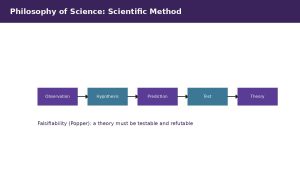
Rawls’ method of reasoning from a carefully controlled hypothetical scenario to general principles parallels the idealized thought experiments used to test theories in Philosophy of Science and the Scientific Method.
Rawls asks us to imagine rational individuals choosing the basic principles that will structure their society from an “original position,” behind a “veil of ignorance” — meaning they do not know their own eventual race, gender, class, natural talents, religion, or even their particular conception of the good life.
Worked Example: Because you do not know whether you will end up rich or poor, talented or disabled, part of a majority or minority group, Rawls argues you would rationally choose principles of justice that protect you no matter which position you end up occupying — rather than principles that favor a specific group you might not belong to. This thought experiment is designed to filter out self-interested bias and produce genuinely fair principles.
5.2 The Two Principles of Justice
Rawls argues that rational parties behind the veil of ignorance would choose:
- The Liberty Principle: each person has an equal right to the most extensive set of basic liberties compatible with a similar system of liberties for all.
- The Difference Principle: social and economic inequalities are permissible only if they (a) are attached to positions open to all under fair equality of opportunity, and (b) work to the greatest benefit of the least-advantaged members of society.
Worked Example: Under the Difference Principle, an inequality — such as higher pay for surgeons than for unskilled laborers — is justified only if this inequality actually improves the position of the worst-off (e.g., by incentivizing enough skilled surgeons to exist, ultimately benefiting even those who cannot afford private healthcare, through spillover effects like medical research or emergency care availability). An inequality that merely enriches the already-advantaged without any such benefit to the worst-off would be unjust, according to Rawls’ framework.
5.3 Objections to Rawls
Libertarian critics like Robert Nozick argue that the Difference Principle unjustifiably permits redistributing legitimately, voluntarily acquired property/wealth without adequate justification (his famous “Wilt Chamberlain” example argues that free, voluntary transactions between individuals can produce unequal outcomes without any injustice occurring at any single step). Communitarian critics, meanwhile, argue that the “original position” presupposes an unrealistically abstract, atomized individual detached from the actual social and cultural context that shapes real human identity and values.
6. Comparing the Four Thinkers
| Thinker | State of Nature | Purpose of Contract | Government Type |
|---|---|---|---|
| Hobbes | War of all against all | Escape chaos, secure order | Absolute sovereign |
| Locke | Peaceful but inconvenient | Better protect natural rights | Limited, conditional government |
| Rousseau | Peaceful, later corrupted by society | Express the general will | Direct democracy / collective self-rule |
| Rawls | (Hypothetical) original position | Derive fair principles of justice | Constitutional framework guaranteeing liberty and fair distribution |
7. Common Assignment Pitfalls
- Treating the “state of nature” as a claim about literal human prehistory rather than a philosophical device for isolating what justifies political authority — most contract theorists, especially Rawls, intend it as a hypothetical thought experiment, not anthropology.
- Confusing Rousseau’s “general will” with simple majority rule — the general will is meant to track the genuine common good, which Rousseau explicitly distinguishes from the mere aggregate of private preferences.
- Assuming all social contract theories justify strong government intervention — Locke’s version specifically justifies a limited government focused on protecting pre-existing rights.
- Forgetting to note that Rawls’ contract is explicitly hypothetical (a thought experiment for deriving principles), unlike the more historically-framed contracts imagined by Hobbes, Locke, and Rousseau.
8. Applying These Concepts: A Sample Assignment Response
Question: “Which social contract theorist offers the most persuasive account of legitimate political authority?”
Sample structured answer: Briefly summarize each thinker’s state of nature and resulting theory of government (as in Section 6’s comparison table). Choose a specific standard for evaluation (e.g., which theory best balances individual liberty against social order, or best accounts for legitimate resistance to unjust government). Argue for your chosen theorist while directly engaging with at least one serious objection (e.g., if defending Locke, address the difficulty of specifying exactly when government has sufficiently violated the social trust to justify revolution; if defending Rawls, address Nozick’s entitlement-based critique of redistribution).
Social contract theory draws directly on assumptions about human nature and rational self-interest that overlap with normative ethical theories, and its emphasis on consent connects to questions about free will and determinism — can consent under real historical or economic pressure ever be considered fully free? Practice comparing all four thinkers on the same specific issue (e.g., the right to revolution, or the treatment of inequality) to sharpen your ability to write comparative political philosophy essays.
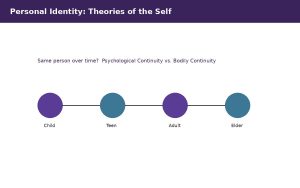
Locke’s claim that natural rights can be known through reason alone draws on the same rationalist commitments examined in Epistemology and Theories of Knowledge. Hobbes’ pessimistic account of human motivation rests on assumptions about the mind’s drives and self-interest, a topic explored in Philosophy of Mind and the Mind-Body Problem. Evaluating whether Rawls’ original position argument is valid requires exactly the deductive tools covered in Logic: Deductive and Inductive Reasoning. Rousseau’s idea that society corrupts an originally free individual echoes existentialist concerns about authenticity under social pressure, discussed in Existentialism. Rousseau’s claim that society corrupts an originally free and virtuous human nature closely parallels debates about whether art expresses authentic emotion or merely performs it, examined in Aesthetics: Philosophy of Art and Beauty. And Hobbes’ claim that people remain recognizably the same political subjects who consented to the contract over time raises questions taken up directly in Personal Identity and Theories of the Self.
Practice comparing all four thinkers on the same specific issue (e.g., the right to revolution, or the treatment of inequality) to sharpen your ability to write comparative political philosophy essays. If you need additional help developing and structuring that analysis, philosophy essay support can help you turn the comparison into a clear, well-organized argument.
Frequently Asked Questions
What is the state of nature in social contract theory? It is a hypothetical (or, for some thinkers, historical) condition of human life before organized political society, used as a baseline for reasoning about what legitimate government would need to provide and why individuals would consent to it.
What is the main difference between Hobbes and Locke? Hobbes viewed the state of nature as a violent “war of all against all,” justifying near-absolute sovereign power to escape it. Locke viewed the state of nature as merely inconvenient, justifying only a limited government whose sole purpose is to better protect pre-existing natural rights.
What is Rousseau’s “general will”? It is the collective will aimed at the genuine common good of a community, as distinct from the mere sum of individual private preferences (which Rousseau called “the will of all”). Legitimate law, for Rousseau, must express this general will.
What is Rawls’ veil of ignorance? It is a thought experiment in which rational individuals choose the principles of justice for their society without knowing their own eventual race, class, talents, or position — designed to produce genuinely fair principles by removing self-interested bias.
Do modern governments actually rest on a real historical contract? No — with rare exceptions, most social contract theories (especially Rawls’) use the “contract” as a hypothetical philosophical device to justify or evaluate political authority, not as a literal historical event.