
“Roles and Responsibilities” is often the unit where CACHE Level 1 students realize childcare involves a lot more structure than they expected — it’s not just about being kind to children, but understanding a specific role within a team, following professional boundaries, and knowing what’s expected of you day to day. This guide walks through the different roles you might encounter, what “responsibility” actually means in a professional childcare context, and how to write assignment answers that go beyond generic statements like “be caring and patient.”
Table of Contents
ToggleUnderstanding Different Roles Within a Childcare Setting
Even at Level 1, assignments often expect you to recognize that a childcare setting isn’t made up of one single job title, but a range of different roles working together.
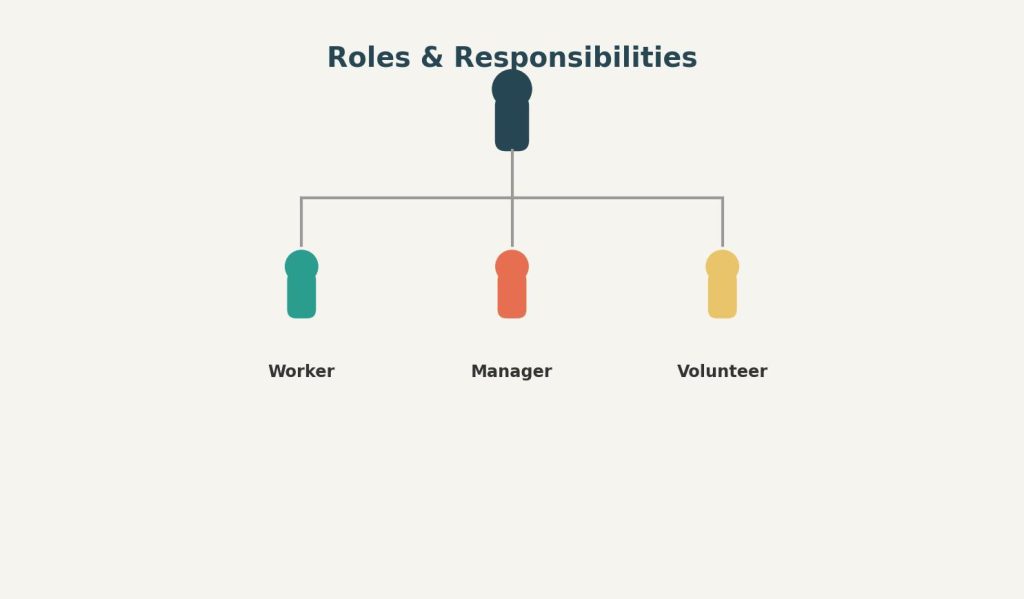
- Nursery/childcare worker or assistant — provides direct, day-to-day care and supports children’s play and learning under the guidance of more senior or qualified staff.
- Room leader / senior practitioner — typically a more experienced or qualified staff member responsible for overseeing a specific room or group of children, guiding less experienced staff.
- Manager / setting leader — responsible for the overall running of the setting, including staffing, policies, and liaising with parents and external bodies such as Ofsted (in England).
- Volunteer — supports the setting informally, often without the same qualifications or level of responsibility as paid staff, but still expected to follow the setting’s policies and boundaries.
- Student / learner on placement — gaining experience and working under supervision, with responsibilities appropriate to their training stage rather than full independent responsibility.
Worked example distinguishing roles: “In a typical nursery room, a room leader might plan the week’s activities and oversee two nursery assistants, who carry out the day-to-day care of the children — feeding, changing nappies, supporting play — while a volunteer might support with specific tasks, such as reading stories to a small group, always under the supervision of a paid member of staff.”
Common assignment mistake: Describing “the role of a childcare worker” in a way that could apply to any role, rather than being specific about what makes a particular role distinct — for example, what makes a manager’s responsibilities different from a nursery assistant’s.
What “Responsibility” Actually Means in a Childcare Context
CACHE Level 1 assignments often ask you to “describe your responsibilities,” and a common mistake is writing only about tasks (what you do) rather than responsibilities (what you’re accountable for and why it matters).
Weak answer: “My responsibilities include playing with children and helping at snack time.”
Stronger answer: “My responsibilities include supervising children safely during play, ensuring I never leave a young child unattended, and supporting snack time by following the setting’s hygiene procedures, such as washing my hands and checking for any known allergies before serving food. These responsibilities matter because they directly affect children’s safety and wellbeing, not just their enjoyment of the activity.”
Notice the stronger version explains why each responsibility matters, not just what the task involves — this small addition is one of the easiest ways to strengthen a Level 1 assignment answer.
Key Areas of Responsibility Common Across Childcare Roles
Regardless of the specific job title, most CACHE Level 1 courses expect you to understand a few core areas of responsibility that apply broadly:
Safety and Supervision
Worked example: “A key responsibility of any adult working with young children is maintaining appropriate supervision at all times — for example, never leaving a child unattended near water, even for a moment, since young children can be at risk of harm very quickly in situations adults might assume are low-risk.”
Following Setting Policies
Worked example: “Even as a volunteer, I would be responsible for following the setting’s policies, such as its behavior management approach or its procedure for signing children in and out at pickup time, rather than doing things my own way, since consistency across staff helps keep children safe and settings running smoothly.”
Confidentiality
Worked example: “I would be responsible for keeping information about children and families confidential — for example, not discussing a child’s personal circumstances with other parents, or sharing details on social media, since families trust the setting to handle their information appropriately and respectfully.”
Professional Boundaries
Worked example: “Even in a caring, friendly setting, I would be responsible for maintaining appropriate professional boundaries — for example, not giving out my personal phone number to parents, or meeting a family outside of the setting privately, since maintaining clear boundaries protects both the children, the families, and myself professionally.”
Working as Part of a Team
Worked example: “I would be responsible for communicating clearly with colleagues, such as passing on important information during a handover between shifts (for example, if a child seemed unwell or upset earlier in the day), since a breakdown in this kind of communication could mean important information about a child’s wellbeing gets missed.”
The Wider Context Childcare Workers Operate Within
CACHE Level 1 often introduces the idea that a childcare role doesn’t exist in isolation — it sits within a wider context involving families, the local community, and (for more formal settings) regulatory bodies.
Worked example: “A childcare worker’s role isn’t limited to the time a child spends directly in their care — it also involves building positive relationships with parents and carers, since parents are the primary source of information about a child’s individual needs and routines. In a registered setting, staff also work within a wider regulatory context, following guidelines set by bodies such as Ofsted (in England), which inspect settings to ensure children’s safety and quality of care.”
Common assignment mistake: Describing the childcare role only in terms of direct interaction with children, without acknowledging the wider network of relationships (parents, colleagues, the community, regulatory context) a childcare worker operates within — assignments at this level often specifically test awareness of this bigger picture.
Personal Qualities vs. Professional Responsibilities: A Distinction Worth Making
A common weakness in Level 1 assignments is listing personal qualities (patient, kind, caring) as though they were the same thing as professional responsibilities. Strong answers acknowledge both, but keep them distinct.
Worked example: “Personal qualities such as patience and kindness are valuable in a childcare role and help build positive relationships with children, but they are not a substitute for following specific professional responsibilities, such as safety procedures or confidentiality requirements. A worker could be a naturally kind and patient person and still fail in their responsibilities if they didn’t follow the setting’s safety or hygiene procedures correctly.”
A Simple Approach for Students Stuck on a Roles and Responsibilities Assignment
- Identify the specific role the question is asking about (worker, room leader, manager, volunteer) rather than writing generically about “childcare staff.”
- For each responsibility you describe, add a brief reason explaining why it matters, not just what the task involves.
- Cover more than one area if possible — safety, confidentiality, professional boundaries, teamwork — rather than focusing only on direct care tasks.
- If relevant, briefly acknowledge the wider context (parents, colleagues, regulatory bodies) the role operates within.
- Keep personal qualities (patience, kindness) separate from specific professional responsibilities (following policies, maintaining confidentiality) — both matter, but they’re not interchangeable.
FAQs
Q1: Do I need to know about Ofsted in detail for CACHE Level 1? Not in great depth — a basic awareness that registered early years settings in England are inspected by a regulatory body (Ofsted) to check safety and quality is generally sufficient at this level, rather than detailed knowledge of the inspection process itself, which is covered in more depth at higher qualification levels.
Q2: What’s the difference between a “task” and a “responsibility” in this context? A task is a specific activity you do (like serving snack), while a responsibility is the broader accountability behind that task (like ensuring you check for allergies and follow hygiene procedures while serving snack) — strong assignment answers explain the responsibility behind the task, not just the task itself.
Q3: I’m a volunteer, not a paid staff member — do I still have the same responsibilities? Generally, yes, in terms of following the setting’s core policies around safety, confidentiality, and professional boundaries — volunteers are usually expected to meet the same basic standards as paid staff in these areas, even if their day-to-day tasks or level of independent decision-making differ.
Q4: How do I answer a question about “working as part of a team” if I don’t have placement experience yet? You can still demonstrate understanding by describing, in general terms, why teamwork and communication matter in a childcare setting (such as passing on important information during a handover), drawing on your course learning materials, even without direct placement experience of your own to describe.
Q5: Why does confidentiality matter so much in a childcare role, even at this introductory level? Childcare workers, even in informal or volunteer roles, often become aware of sensitive information about children and families (health information, family circumstances), and maintaining confidentiality protects families’ trust and privacy — this is considered a foundational professional responsibility across all levels of childcare qualification, not just something introduced at Level 3.
Related Reading
Many of the responsibilities covered here, particularly around safety and supervision, connect directly to Health, Safety and Basic Safeguarding for Childcare: CACHE Level 1 Assignment Guide. Understanding a childcare worker’s role also helps make sense of why supporting play, covered in The Value of Play for Babies and Young Children: CACHE Level 1 Assignment Guide, is treated as such a central responsibility. For the full course structure this topic fits into, see CACHE Level 1 Caring for Children: Complete Course Guide.